
If PPSC is the provincial giant, the Federal Public Service Commission is the gateway to federal government jobs in Pakistan — assistant directors in ministries, posts in FBR and FIA, and dozens of roles across Islamabad's federal departments. Every year the FPSC advertises hundreds of posts, and every one of them runs through the same filter first: a screening test that decides who moves forward.
The good news is that the FPSC screening test is one of the fairest, most beatable competitive tests out there. The pattern is stable, the syllabus is announced in advance, and there is no negative marking. In this guide, we'll cover the FPSC test pattern, the real syllabus, a subject-wise strategy, a 30-day plan, and the mistakes that end most aspirants' journeys.
Understanding the FPSC Screening Test Pattern
Before you study a single page, fix this pattern in your head. The FPSC screening (MCQ) test commonly follows this structure — always double-check your own post's Consolidated Advertisement:
- Total questions: 100 MCQs
- Total marks: 100 (1 mark per question)
- Time allowed: 100 minutes
- Negative marking: none in the commonly followed screening pattern
- Typical split: Part I — English (20 MCQs); Part II — General Ability + post-related subjects (80 MCQs)
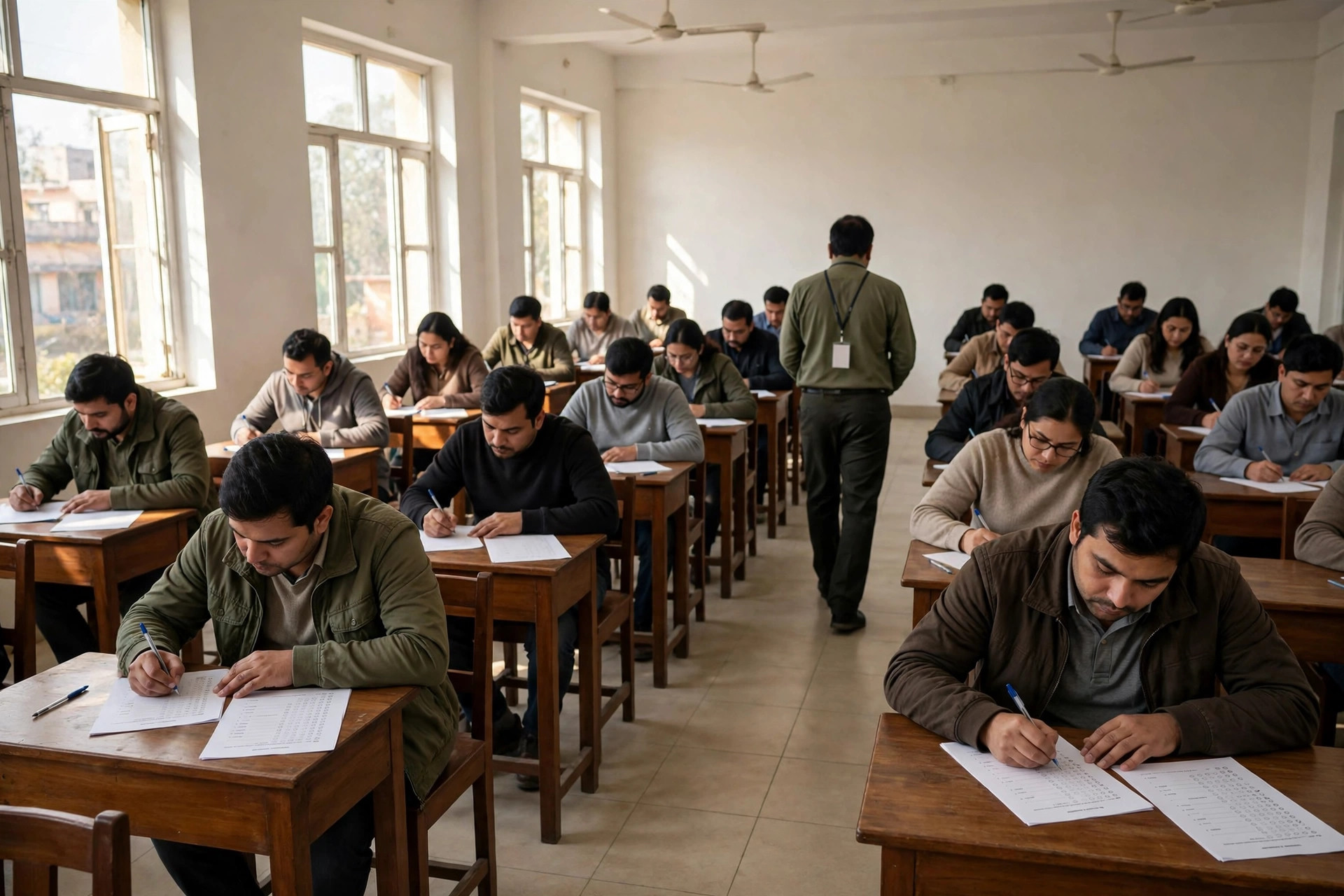
Two things make this pattern aspirant-friendly. First, you get one full minute per question — nearly twice the pace of the PPSC one paper test. Second, with no negative marking, attempt every single question: a blank and a wrong answer both score zero, so guessing costs nothing.
For many posts the screening test is only stage one — high-merit candidates then face a descriptive written test and an interview. Treat the screening test as the gate: you don't need to top it, just clear it comfortably. Our FPSC exam page carries the simulator and subject practice for this stage.
What the FPSC Syllabus Actually Covers
The FPSC announces the syllabus for each post in its advertisement — read yours line by line, because the post-related portion changes everything. But the overall skeleton is remarkably consistent:
Part I — English (20 MCQs)
These 20 marks are fixed for almost every FPSC test: vocabulary (synonyms, antonyms), prepositions, idioms and phrases, one-word substitution, sentence correction, active/passive voice, and direct/indirect narration. This section is pure technique — it rewards daily drills far more than talent.
Part II — General Ability & Post-Related (80 MCQs)
The remaining 80 MCQs mix general knowledge with your post's field. The general portion typically draws from Islamiat, Pakistan Studies, Everyday Science, Current Affairs, Basic Mathematics, and computer fundamentals.
The post-related portion is where federal tests differ from provincial ones. An FBR post leans on economics and taxation basics; an FIA post leans on law-enforcement awareness; a ministry post may test administration concepts. Never prepare this part from guesswork — decode the advertisement's syllabus and cover each bullet with focused MCQ practice.
Subject-Wise Preparation Strategy
English — the 20 fixed marks
Part I is identical across posts, making English the highest-return investment in FPSC preparation. Drill 20 vocabulary words and 10 grammar MCQs daily — idioms, prepositions, and narration rules repeat endlessly. Our English MCQs section is built for exactly this kind of daily repetition.
Islamiat & Pakistan Studies — memory goldmines
Both are pure memory, and the FPSC recycles its favourite facts year after year: Ghazwat dates, Khulfa-e-Rashideen, the 1940–47 timeline, the constitutions of 1956, 1962 and 1973, rivers, dams, and national symbols. Two weeks of consistent practice can lock in 15+ marks.
Everyday Science & GK — breadth beats depth
Cover vitamins and deficiencies, common diseases, SI units, famous inventions and inventors, world capitals, rivers, and "firsts" (first woman, first Muslim, first Pakistani in each field). Bulk MCQ practice — like our General Knowledge section — works far better than theory chapters.
Current Affairs — the freshest marks
Cover the last 6–12 months: the cabinet and judiciary, CPEC developments, international summits, major awards, and sports events. One weekly digest converted into MCQs in your notebook is enough — then test yourself in the Current Affairs section.
Basic Mathematics — the ignored goldmine
Most aspirants skip math — which is exactly why you shouldn't. Percentages, ratios, and averages appear regularly and take seconds once you've revised the formulas. A fortnight in our Basic Mathematics section turns this into free marks.

Your 30-Day FPSC Study Plan
Thirty focused days beat three distracted months. Adjust the hours to your routine, but keep the sequence:
- Days 1–7: Foundation. One reading pass of Islamiat, Pak Studies, and Everyday Science basics. Start daily English drills (20 vocab + 10 grammar MCQs). Decode your post's advertisement syllabus line by line.
- Days 8–14: Volume. Attempt 150+ mixed MCQs daily across all General Ability subjects. Begin the post-specific syllabus. Catch up on 6 months of current affairs.
- Days 15–21: Past papers. Solve FPSC past papers under timed conditions. Keep an error notebook: every wrong answer goes in with its explanation.
- Days 22–30: Simulation. Take full mock screening tests like our FPSC exam simulator. In the final 3 days, revise only your error notebook and formulas.
Why Past Papers Are Non-Negotiable for FPSC
FPSC has habits — and past papers reveal them. The same English idioms, Pak Study facts, and GK "firsts" keep reappearing in slightly rephrased form. Solve past FPSC papers like real tests, then study every option of every question, including the wrong ones. Our solved past papers section exists precisely for this.
Exam-Day Strategy: How Toppers Attempt the Paper
- First pass (60 min): answer everything you know confidently, and mark your best guess on doubtful questions — you'll review them later.
- Second pass (30 min): return to the doubtful ones; eliminate options and upgrade your guesses. Never leave a question blank.
- Final 10 min: double-check the answer sheet against the question paper — bubbling errors are the most painful way to lose marks.
5 Mistakes That Cost Aspirants Their Federal Job
- Ignoring English. 20 fixed marks in Part I — skipping them is like starting the race 20 metres behind.
- Skipping the advertisement's syllabus. The post-related portion is announced in advance; preparing "general FPSC" instead of your post's syllabus is the classic blunder.
- Reading books instead of solving MCQs. This is an MCQ screening test — your preparation must be MCQ-shaped. Theory without practice is decoration.
- No timed practice. One minute per question sounds generous until the hall clock starts ticking. Train at real pace.
- Studying everything, mastering nothing. FPSC rewards repeated exposure to the same core facts, not encyclopaedic reading.
- 100 MCQs · 100 minutes · no negative marking — attempt every question.
- Part I English (20 MCQs) is fixed across posts — drill it daily.
- Read your post's FPSC advertisement syllabus line by line; the post-related portion varies.
- Past papers reveal FPSC's habits — solve them under timed conditions.
Frequently Asked Questions
Does the FPSC screening test have negative marking?
No — in the commonly followed FPSC screening pattern there is no negative marking, so you should attempt all 100 questions. Always confirm in the instructions printed on your own test day.
How much time do you get in the FPSC screening test?
The standard pattern is 100 MCQs in 100 minutes — one minute per question, noticeably more relaxed than the provincial one paper tests.
What happens after the FPSC screening test?
High-merit candidates are shortlisted for a descriptive written test (for many posts) and then a panel interview. The screening test is the gate — clear it with a comfortable margin.
Start practicing — free, no login needed
195,477+ MCQs · solved past papers · real exam simulator with timer & negative marking